 Highest of the three
Glacier Paradise
Cable car from Zermatt
- Altitude
- 3,883 m
- Under-3s
- Not above Trockener Steg
- Price
- from $129
Guides
Language
EnglishCurrency
US dollar · $On GetYourGuide you see prices in this currency.
Guide · Altitude
The lifts lift you from a village to the edge of the high glaciers in well under an hour. Here is the Matterhorn Glacier Paradise elevation in context, and what health bodies say about going that high so fast.
Editorial team, matterhornglacierride.comUpdated October 22, 2026Reading time 8 min54 sources
At a glance
The top of the lift system sits at 3,883 meters, a figure Zermatt Bergbahnen pairs with the claim of Europe's highest mountain station.1 Valais tourism lists the same number as the highest ski slope altitude of the resort, whose village it puts at 1620 m.7 A few official pages print a different value: the Alpine Crossing station page and a technical sheet from the Italian lift company give 3,821 m for the top station.89
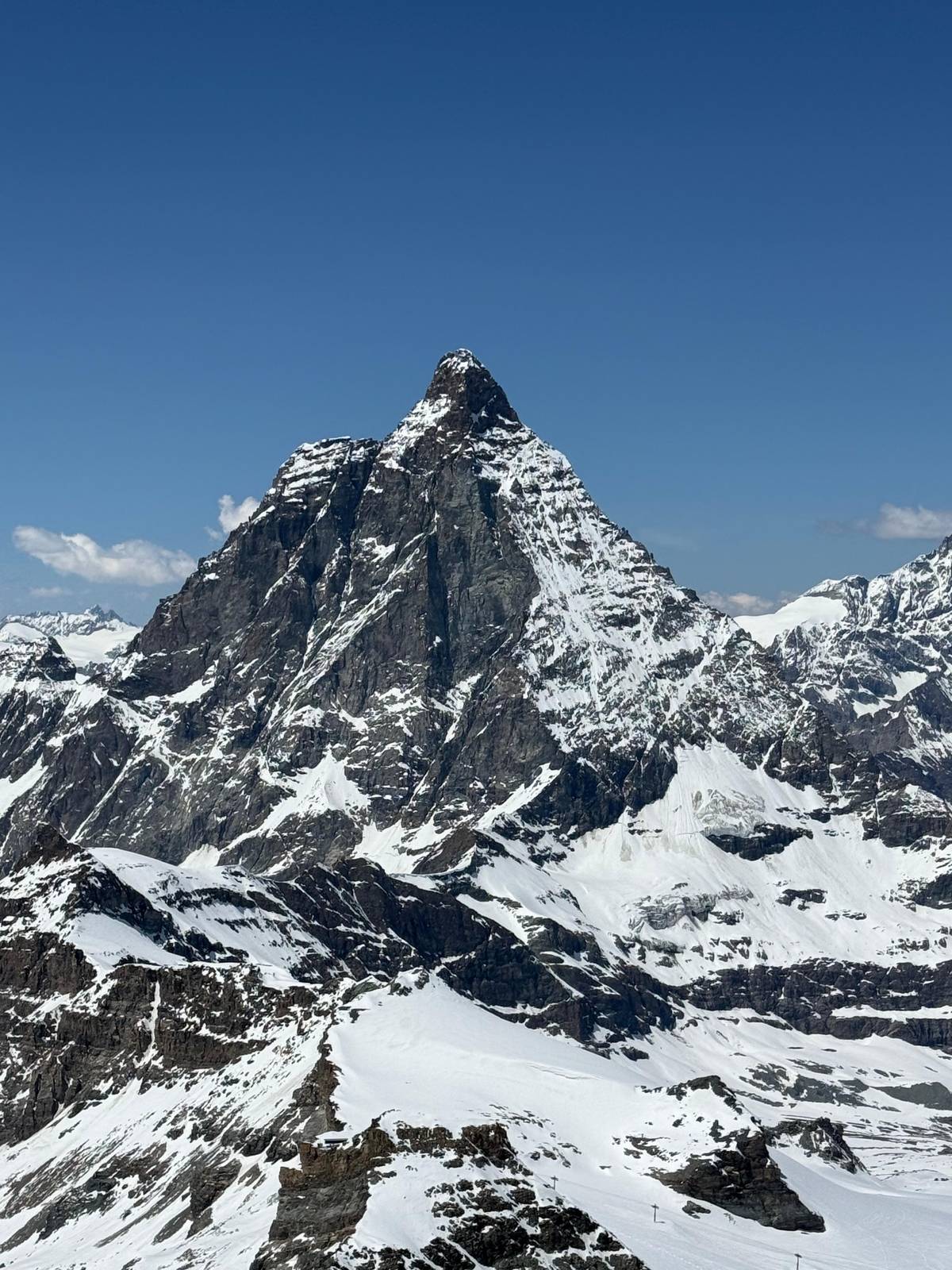
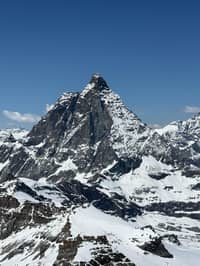
The mountain under the station has its own names: the Klein Matterhorn, which the Italian side calls the Piccolo Cervino.10 The first cable car to the Klein Matterhorn was finished in late autumn 1979 after about three years of building work.11 So when you read about Klein Matterhorn and the Glacier Paradise, both names point at the same rock, with the modern station and its platform built on top.
Height on its own says little until you compare it. The Matterhorn rises to 4,478 meters, and Monte Rosa, almost opposite, is higher still by almost 170 meters.1213 From the summit platform Zermatt Bergbahnen counts 38 four-thousanders and 14 glaciers in three countries.14 The rival viewpoint across the valley, Gornergrat, reaches 3,089 meters, and the border at Testa Grigia lies at 3,480 meters.1516
The climb
Zermatt
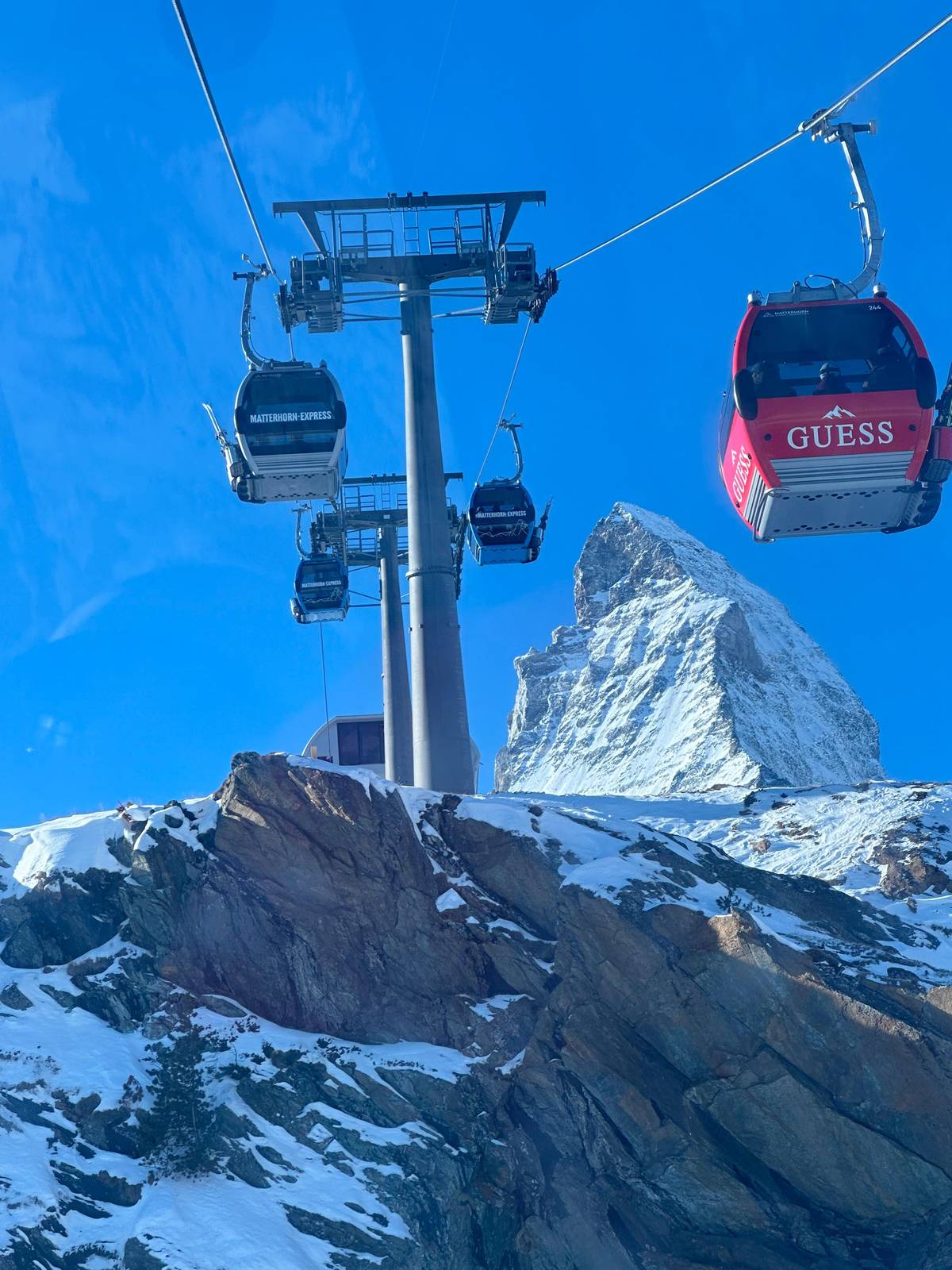
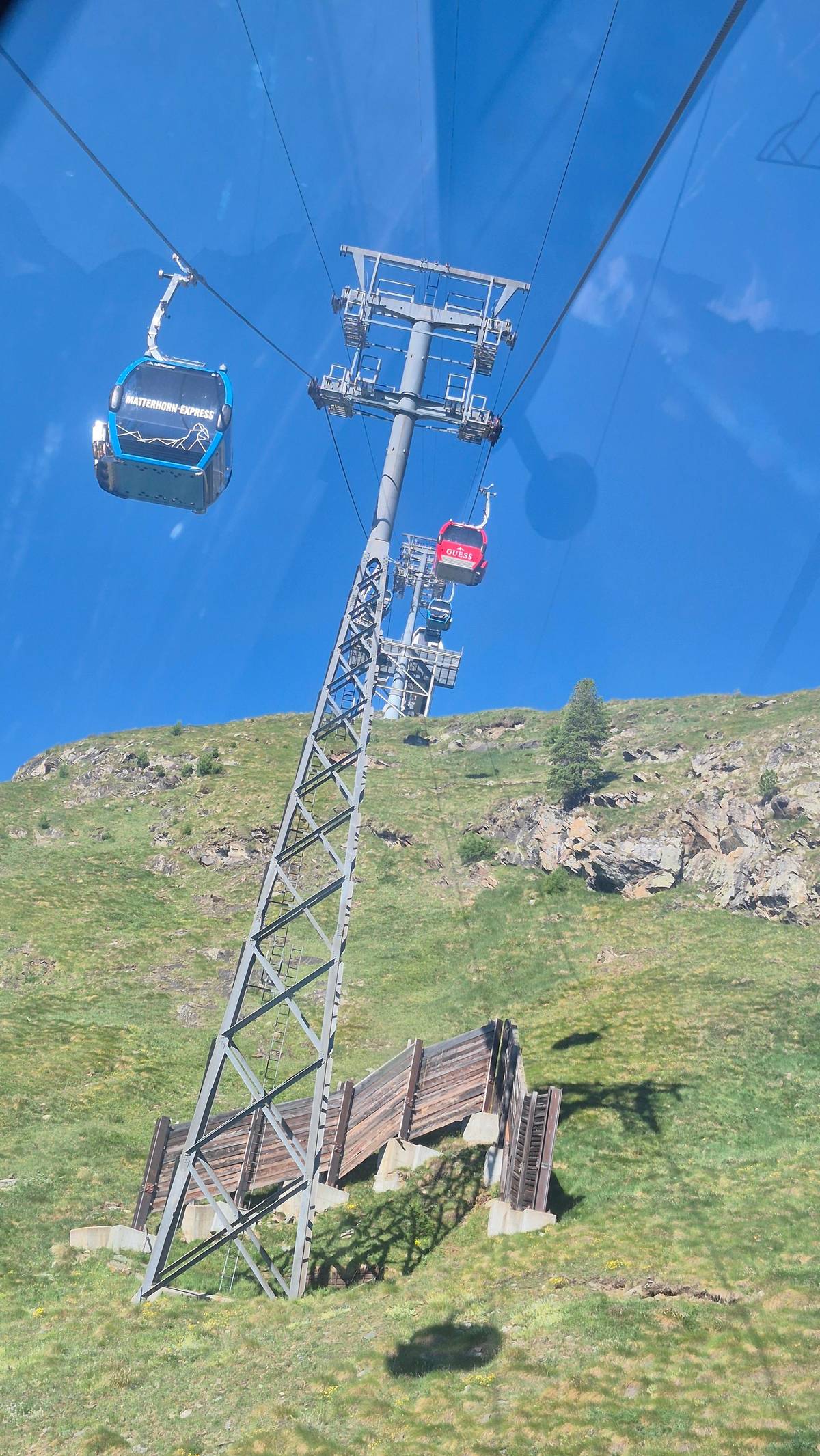
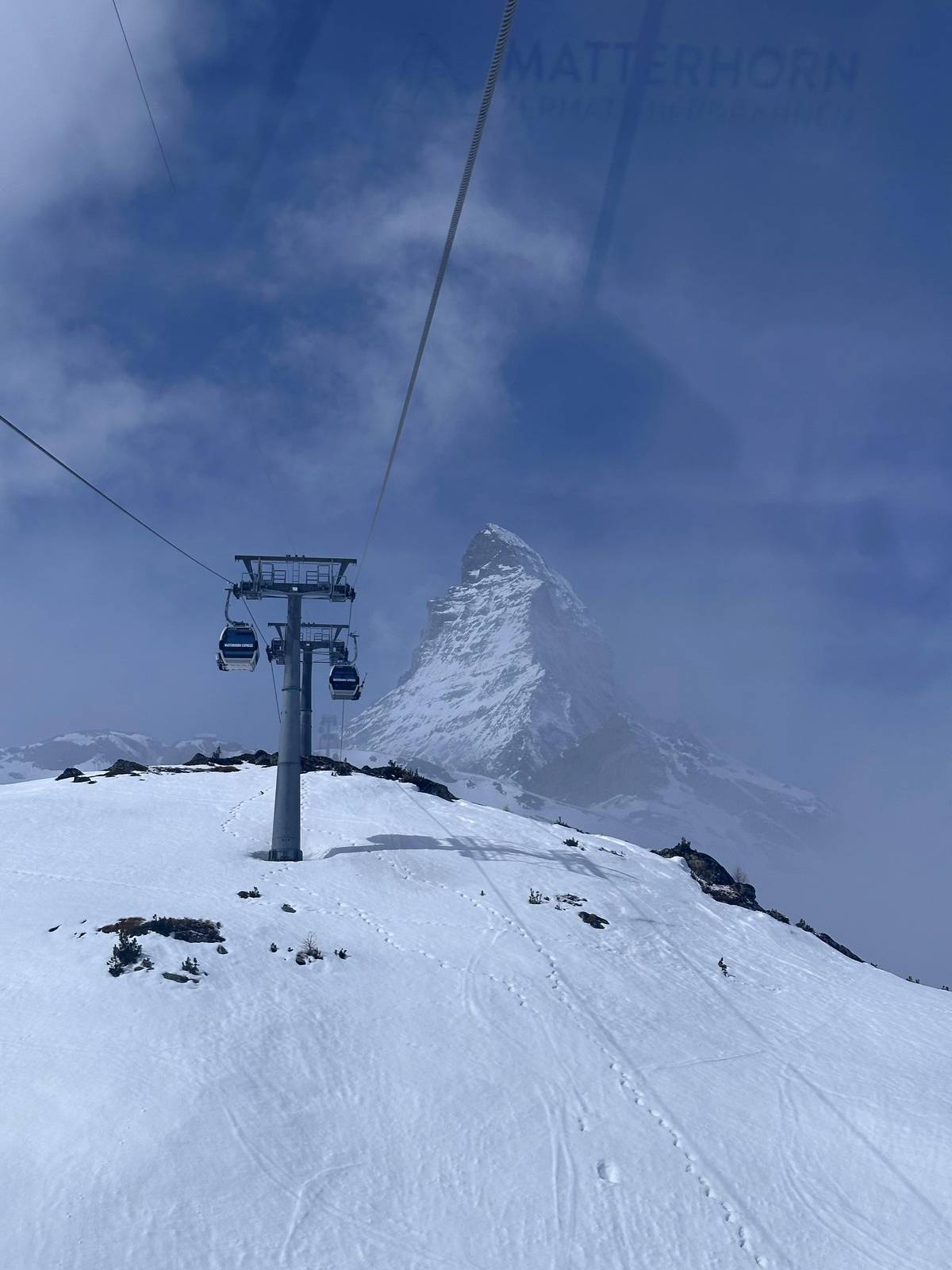
The Matterhorn Express leaves from 1,638 meters.2
Furi
The hamlet stop sits at 1,867 meters.17
Schwarzsee
The station stands at 2,583 meters.18
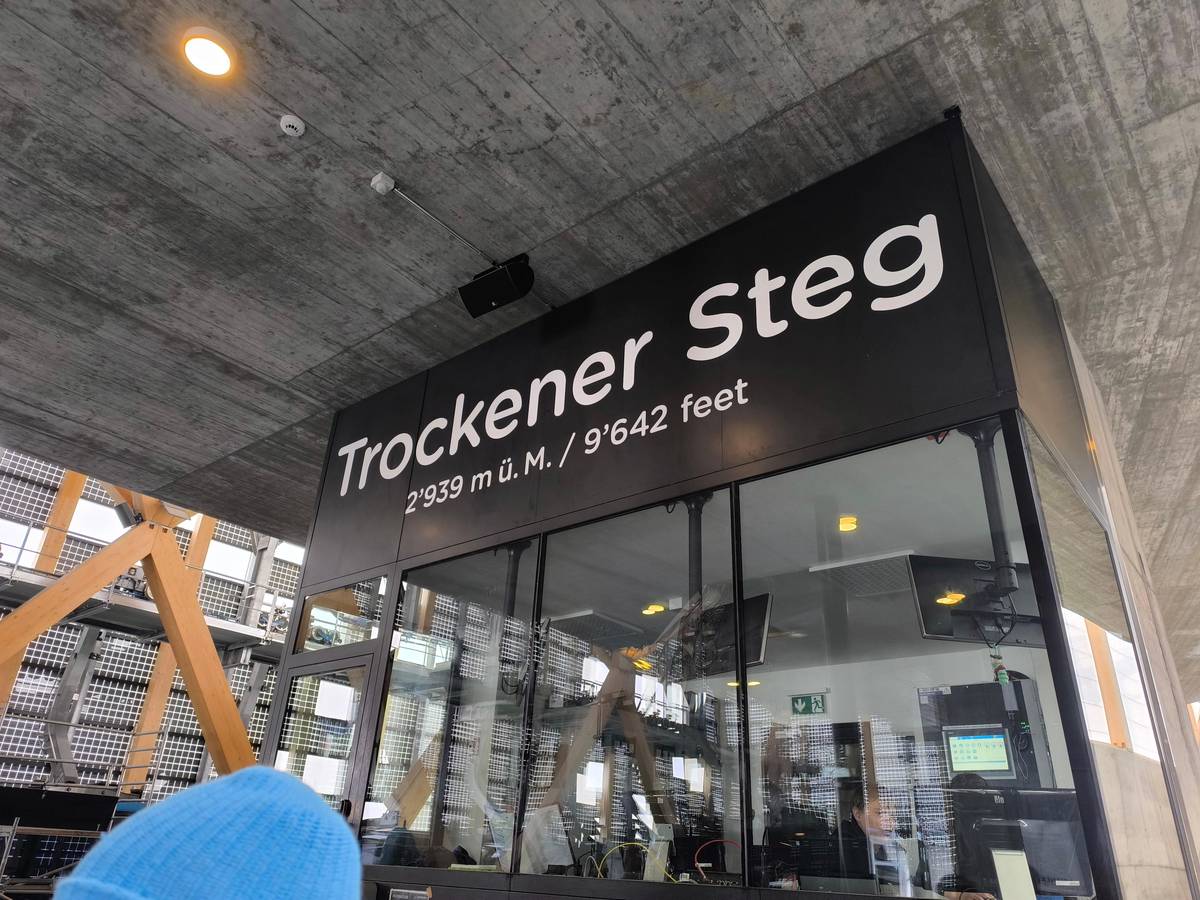
Trockener Steg
At 2,939 meters you switch to the ride across the glacier.19
Summit station
The top station is at 3,883 meters.1
The lift chain climbs in clear steps. The Matterhorn Express starts at the valley station at 1,638 meters and stops first at Furi, at 1,867 meters.217 Schwarzsee follows at 2,583 meters, then Trockener Steg at 2,939 meters, where you change to the cable car across the glacier.1819 The last section ends at the summit station at 3,883 meters.1 Each stop is a chance to step out and let your body catch up.
That gain happens fast. Zermatt Bergbahnen gives around 40 minutes from Zermatt to the top, changes included.3 The final cable car alone has an elevation difference of 900 m and a ride time of 9 min, according to its brochure.2021 You sit or stand the whole way, and the ease of it is exactly why the altitude deserves a moment of thought before you go. Nothing about the ride itself is strenuous.
At the top you do not need climbing skills. Zermatt Bergbahnen says the summit platform can be reached without mountaineering experience or equipment, on foot and with no additional aids.2223 A summit lift takes visitors up to the viewing platform with its all-round view.24 The NHS notes that you are more likely to get altitude sickness if you travel or climb to high altitude quickly.4
What the health bodies say
| Source | Advice or finding | Figure |
|---|---|---|
| NHS | Altitude sickness usually begins above | 2,500 meters |
| NHS | Symptoms usually start after | 6 to 10 hours |
| NHS | If worse, go lower by | 300 to 1,000 meters |
| CDC | Avoid going in one day from low ground to above | 2,750 meters |
| CDC | No alcohol or heavy exercise on arrival for | 48 hours |
| MeteoSwiss | Temperature drop with height, on average | 0.65°C per 100 meters |
Each line restates the cited source; it is general guidance, not personal medical advice.42526272829
High points nearby
Highest of the threeCable car from Zermatt
 One more cable car
Border with Italy
 Lower alternative
Decision helper
Find your situation in the left column
Children under three may not ride beyond it to the summit.5
The ticket lists pregnant women as not suitable, and the CDC advises a doctor's view.30
The CDC advises a doctor familiar with high-altitude medicine.31
The CDC advises against going above 2,750 m in one day from low ground.27
The NHS says they may prescribe preventive medicine.32
You can get altitude sickness if you're in a place that is at a high altitude (usually more than 2,500 metres above sea level).
The NHS says you can get altitude sickness at high altitude, usually more than 2,500 meters above sea level, and it lists some places in the Alps among them.434 No one can say in advance who will notice altitude sickness at Matterhorn Glacier Paradise and who will not, but the health bodies set out the risk in plain language, and it is worth reading before you buy a ticket for a day this high.
The CDC puts it in feet: travelers going above 8,000 feet may be at risk of altitude illness, which low oxygen levels in the air cause.35 Timing matters too. According to the NHS, symptoms usually start 6 to 10 hours after being at a high altitude.25
The NHS lists the main symptoms as a headache, loss of appetite, feeling or being sick, tiredness, dizziness and difficulty sleeping.36 The CDC calls acute mountain sickness the mildest form of altitude illness and names headache, tiredness, lack of appetite, nausea and vomiting.37 It adds a detail for parents: children who cannot yet talk may simply seem fussy.37 None of these signs is unusual on its own, which is why they are easy to dismiss.
Checklist
Video
The video starts loading once you tap play.
Zermatt Bergbahnen draws one firm line itself. Children under three years of age may not travel from Trockener Steg to the summit for health reasons, and it names altitude sickness.5 Its terms and conditions repeat the advice and exclude liability as far as the law allows.38 The GetYourGuide ticket sold here lists the same group as not suitable, children under 3, along with pregnant women.
On pregnancy, the CDC says brief trips to high elevations are possible but should be discussed with a doctor, who may advise against sleeping above 10,000 feet.30 The UIAA Medical Commission advises women who know they are pregnant to seek medical advice before going to high altitude.39 With the ticket's own listing ruling it out as unsuitable, that conversation comes before booking, not on the platform.
People with heart or lung disease should speak to a doctor familiar with high-altitude medicine before the trip, the CDC advises.31 It also says that some illnesses, such as sickle cell anemia or severe pulmonary hypertension, rule out high elevations entirely, and that diabetes can be harder to manage up high.4041 The NHS suggests a GP or travel clinic if you have had altitude sickness before.32
Both health bodies give advice about the speed of the climb. The NHS suggests trying not to go from below 1,200 meters to above 3,500 meters in 1 day.42 The CDC advises avoiding travel from a low elevation to above 9,000 feet, which it gives as 2,750 m, in one day.27 Valais tourism lists Zermatt itself at 1620 m, and the summit station stands at 3,883 meters.71 Your own starting point is the number to watch.
The CDC suggests considering day trips to a higher elevation and returning to a lower one to sleep, which is how a visit to the glacier station naturally works.43 A night in the village before the ride is one way to follow both pieces of advice instead of arriving from the lowlands and going straight up. Plan the ride for your second morning in the valley if your itinerary allows it.
Drink enough water so you do not get dehydrated, the NHS advises, and do not drink alcohol while traveling at altitude.4445 The CDC goes further for longer stays: no alcohol or heavy exercise for at least the first 48 hours after arriving above 8,000 feet.28 A glass of wine at the summit restaurant can wait for the valley, and a slow walk on the platform beats a hurried one. Small habits like these cost nothing.
The first rule from the NHS is simple: rest at the same altitude until you feel better, and do not travel or climb any higher.33 Symptoms usually get better in 1 to 3 days, it says.46 If they get worse or do not improve after 1 day, it advises going lower if you can, around 300 to 1,000 meters down.26 On a day visit, the cable car down is that lower ground. Give your body time before deciding anything.
The CDC agrees that people with altitude illness should not go higher until they are free of symptoms, and that anyone whose symptoms worsen while resting should travel to a lower elevation.47 It describes high-altitude cerebral edema as rare but potentially fatal, and says the person must immediately move, or be moved, lower.48 For high-altitude pulmonary edema it gives the same instruction and adds that oxygen treatment is likely.49
The NHS also tells you to go lower straight away, around 300 to 1,000 meters, when someone needs urgent medical help for altitude sickness.50 Tell the lift staff if someone in your group feels seriously unwell, and head down together. None of this is a reason to stay away; it is a reason to watch yourself and the people you travel with. Keep the group together on the way down, and let the person who feels ill set the pace.
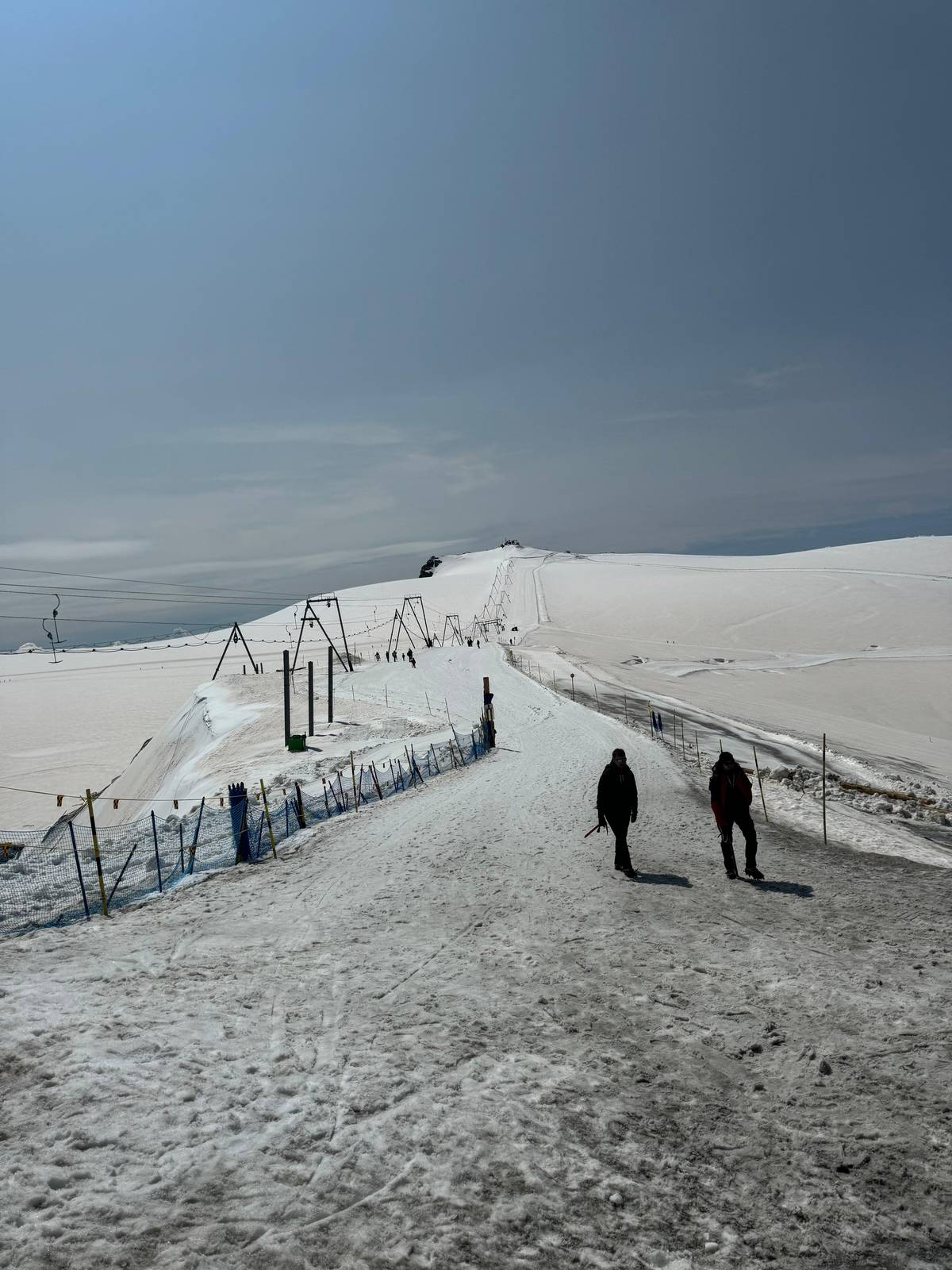
Height changes the air as well as the oxygen. MeteoSwiss says temperature drops by an average of 0.65°C for every 100 meters of altitude, and by almost 1°C per 100 meters where the air is very dry.29 The station sits far above the village, so expect it to feel much colder than Zermatt, and dress for it: the ticket listing asks you to bring warm clothing, warm shoes and snow clothing.
The sun is the other thing to respect. MeteoSwiss explains that UV intensity rises by 10 to 12% for every 1,000 meters as the atmosphere thins.6 The Swiss Federal Office of Public Health says that at 3,000 meters the UV index can exceed 12 in early July even when it is cold, and that UV is strongest in Switzerland between 11:00 and 16:00.5152 Midday on the platform is when it bites hardest.
Snow multiplies it. MeteoSwiss says a snow-covered surface can reflect up to 80% of solar radiation, and the federal health office gives 40 to 90 percent reflection of UV on snow.5354 Sunglasses, a hat and sunscreen belong in the bag in every month, and they matter on a cloudy day too, when the glare off the glacier is easy to underestimate.
Above the clouds
Pick your date, swap the voucher in Zermatt and ride up while the sky is clear.
3,883 meters. Zermatt Bergbahnen calls it Europe's highest mountain station; a few official pages give 3,821 m.18
No. Under-3s may not travel from Trockener Steg to the summit, for health reasons.5
After 6 to 10 hours, says the NHS. That is the NHS window for time spent at a high altitude.25
Rest and do not go higher. If symptoms worsen, go lower; the NHS suggests around 300 to 1,000 meters down.3326
Its listing says no. The listing names pregnant women as not suitable; the CDC and UIAA advise seeing a doctor first.3039
No. Zermatt Bergbahnen says it can be reached without mountaineering experience or equipment.22
Yes, noticeably. UV intensity rises by 10 to 12% for every 1,000 meters, says MeteoSwiss.6
Sources
Keep reading