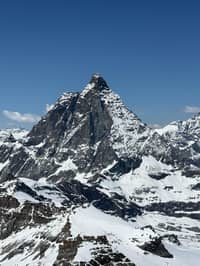
 Longest days
High summer
June to August
- Valley high in July
- 20 °C
- Daylight in June
- 15.7 hours
- Glacier skiing
- Mornings, if open
Guides
Language
EnglishCurrency
US dollar · $On GetYourGuide you see prices in this currency.
Guide · Seasons
The lifts to the summit run in both seasons, but the day you get is very different. Here are the timetables, the valley averages month by month, and what the height adds on top.
Editorial team, matterhornglacierride.comUpdated October 22, 2026Reading time 7 min23 sources
Season by season
There is no closed season at the top in the usual sense. Zermatt Bergbahnen runs a summer timetable from 4 May to 31 October 2026 and a winter timetable from 1 November 2026 to 2 May 2027, as read on 22 October 2026.12 Both include the summit, so the choice of month is about the conditions you want, not about whether the lifts turn at all. Pick the conditions first, then fit the ride into them.
Maintenance shifts the route rather than stopping it. In 2026 the Matterhorn Glacier Ride I has work from 27 April to 22 May and from 28 September to 30 October, and the older cable car runs instead during those weeks.5 From 28 September to 13 November 2026 cable cars between Zermatt, Furi and Trockener Steg replace the Matterhorn Express, which returns from 14 November.6 You still reach the summit station; only the cabin and the view through its windows differ.
Spring 2027 brings another window for the summit cable car, from 26 April to 21 May, again with the old cable car in service.7 For a trip on to Italy the dates that matter are different: the Matterhorn Glacier Ride II to Testa Grigia closes for maintenance from 7 January to 26 February 2027.8 Check the current timetable for your travel week before you plan the day around one particular cabin.
Lift calendar
4 May 2026
Zermatt Bergbahnen's summer season runs until 31 October.1
28 September 2026
The old cable car replaces the summit link until 30 October.5
1 November 2026
The winter season runs until 2 May 2027.2
14 November 2026
The Matterhorn Express returns between Zermatt and Trockener Steg.6
7 January 2027
The cable car to Testa Grigia pauses until 26 February.8
26 April 2027
The summit cable car has maintenance until 21 May, with the old one running.7
Summer is the soft season in the valley. In July Zermatt averages a daily high of 20 °C and a low of 8.2 °C, and August is close behind at 19.6 °C and 8.2 °C.3 Days are long: in mid-June daylight lasts 15.7 hours, and in July for 15.4 hours.3 That gives plenty of room for the ride, the platform and a slow way back down. Even so, the warmth of the village is no guide to the platform, where a jacket and gloves still earn their place in the bag.
Up at the glacier, summer still feels like winter for part of the day. MeteoSwiss says the average zero degree line moves between 3,000 m in June and almost 4,000 m in July, can drop below 2,500 m on cooler days and climbs as high as 5,000 m on extremely hot ones.9 Zermatt Bergbahnen says the Theodul Glacier keeps wintry conditions for skiing, snowboarding and freestyling up to midday.4
Summer skiing is not guaranteed every year. On 31.07.2026 Zermatt Bergbahnen temporarily suspended it for guests because of exceptional weather conditions, as read on 22 October 2026.10 The sun is the other summer factor. The federal health office says the UV index can exceed 12 at 3,000 meters in early July even when it is cold, so cover up even on a mild morning.11 Sunglasses and a hat matter as much as a warm layer.
Month by month
Valley averages
| Month | Daylight (h) | Darkness (h) | High / low | Wet days | Lifts to the top |
|---|---|---|---|---|---|
| Jan | 9 | 15 | 1 / -7 °C | 6 | winter timetable |
| Feb | 10.3 | 13.7 | 2 / -7 °C | 6 | winter timetable |
| Mar | 11.8 | 12.2 | 6 / -4 °C | 5 | winter timetable |
| Apr | 13.5 | 10.5 | 10 / -1 °C | 6 | winter timetable |
| May | 14.9 | 9.1 | 14 / 3 °C | 10 | summer timetable |
| Jun | 15.7 | 8.3 | 18 / 7 °C | 10 | summer timetable |
| Jul | 15.4 | 8.6 | 20 / 8 °C | 9 | summer timetable |
| Aug | 14.2 | 9.8 | 20 / 8 °C | 10 | summer timetable |
| Sep | 12.6 | 11.4 | 15 / 5 °C | 7 | summer timetable |
| Oct | 11 | 13 | 11 / 1 °C | 7 | summer timetable |
| Nov | 9.5 | 14.5 | 5 / -3 °C | 7 | winter timetable |
| Dec | 8.7 | 15.3 | 1 / -6 °C | 7 | winter timetable |
Valley averages for the village, not the summit: daylight on the 15th, the mean daily high and low, and wet days from 1 mm upward. MeteoSwiss data, 1991 to 2020.3 Season according to Zermatt Bergbahnen.1
Three seasons
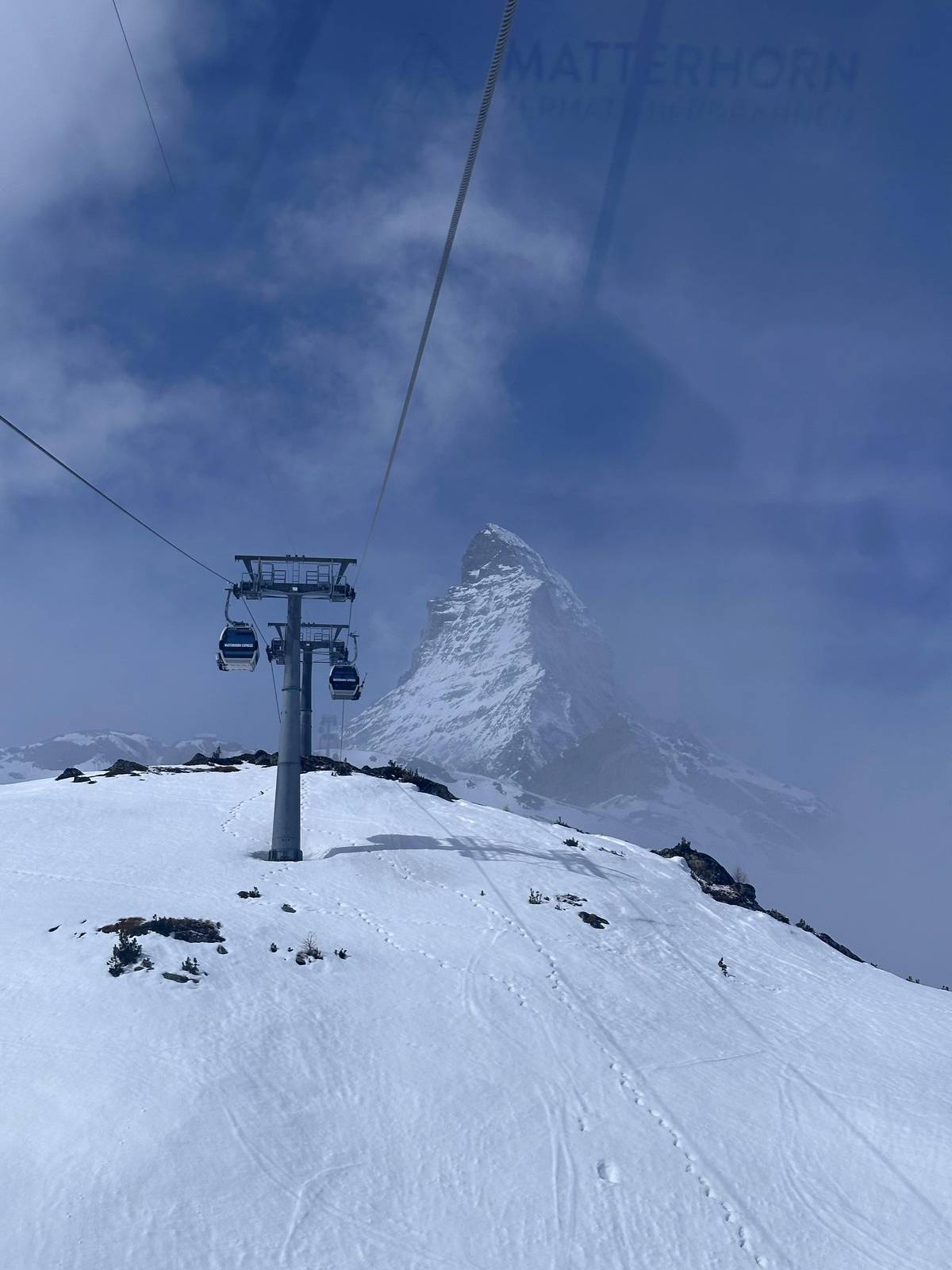
Longest daysJune to August
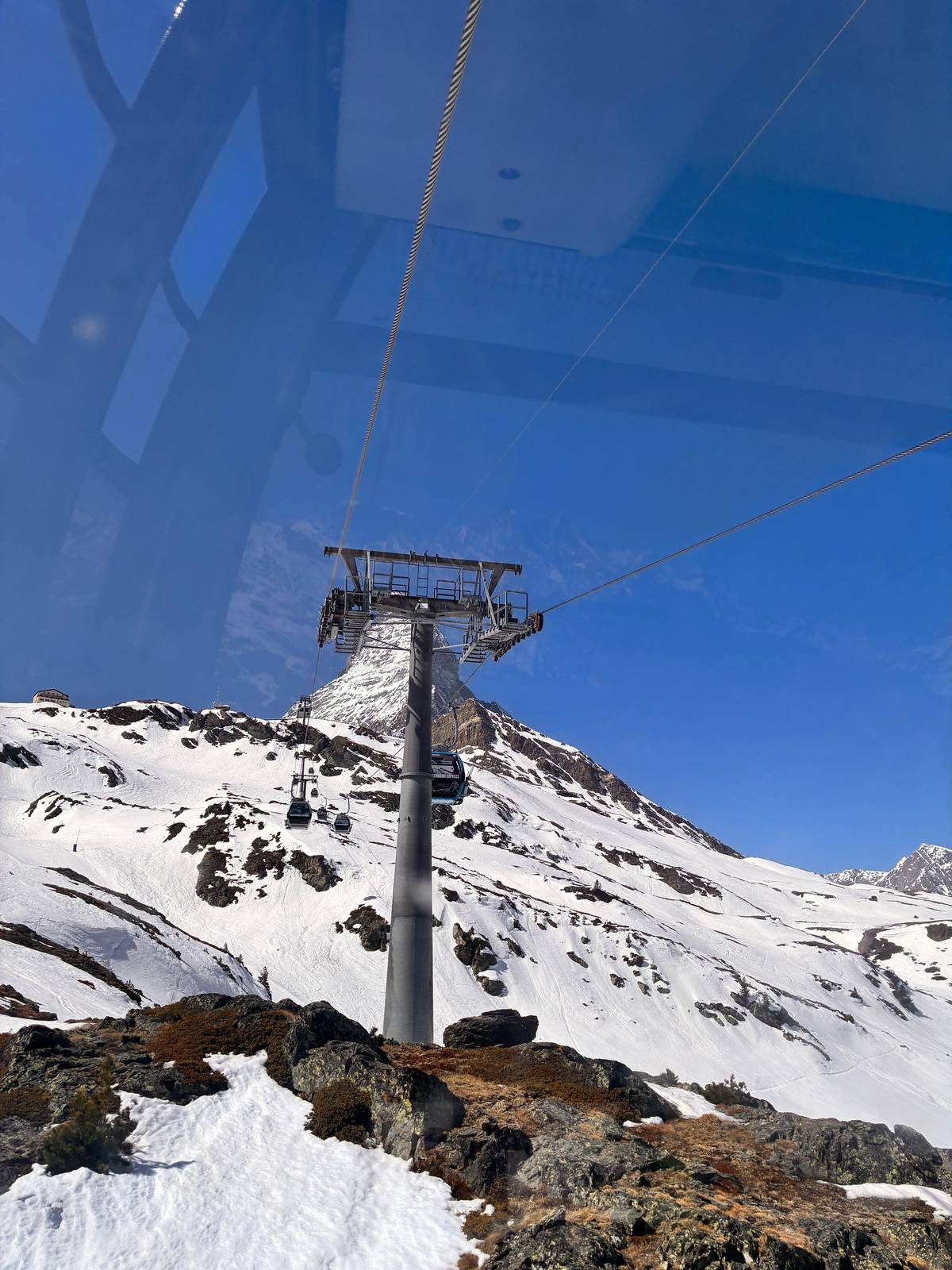 Fewer wet days
September and October
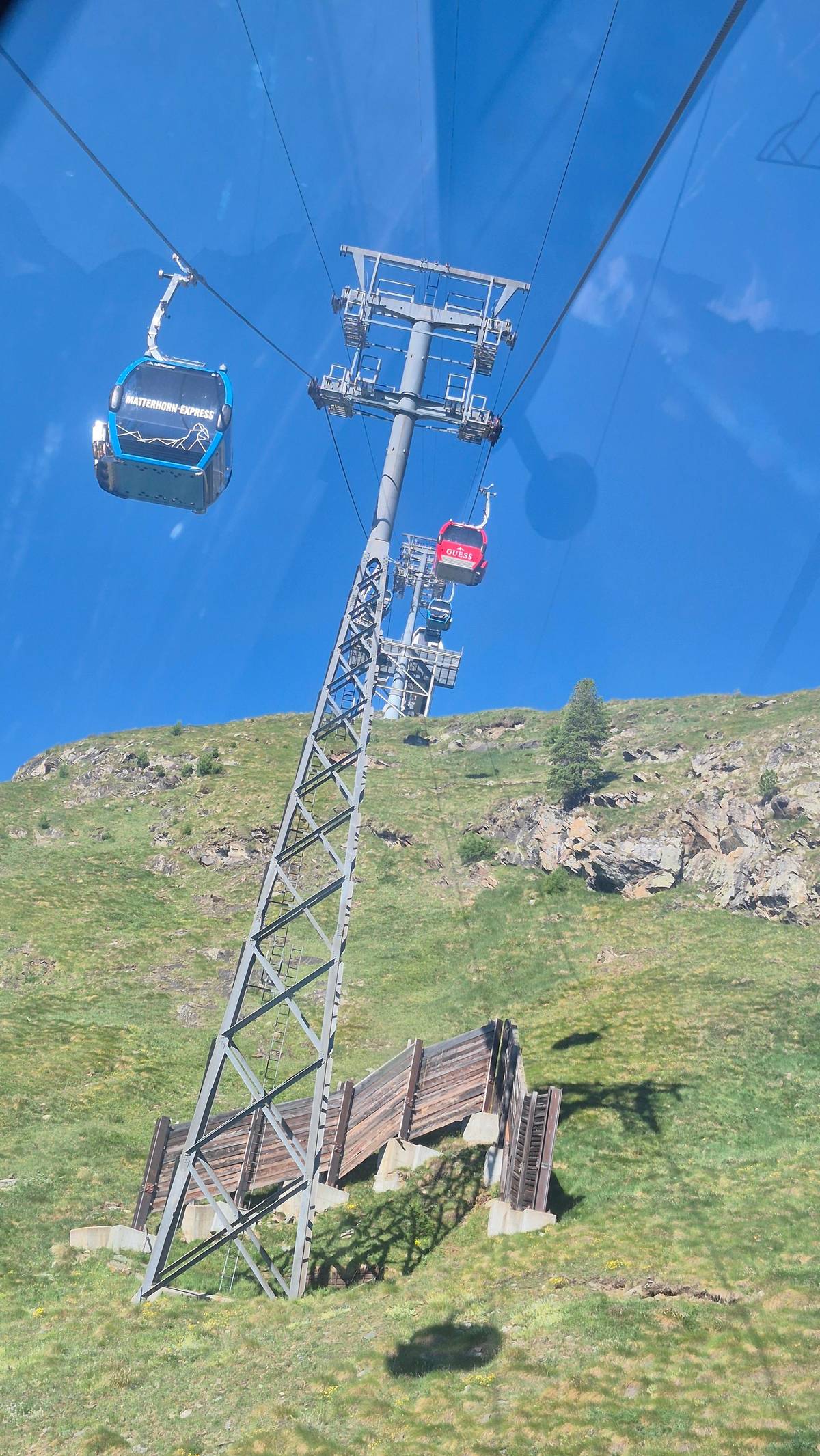 Shortest days
December to February
Decision helper
Start with what matters most to you
Daylight at mid-month reaches 15.7 hours.3
Zermatt averages 5 days with at least 1 mm of precipitation.3
Average daily highs are 20 °C and 19.6 °C.3
Summer skiing was suspended for guests on 31.07.2026.10
The link to Testa Grigia closes from 7 January to 26 February 2027.8
Zermatt Bergbahnen suggests the Cinema Lounge for bad weather.12
In summer, the average zero degree line fluctuates between 3,000 m (in June) and almost 4,000 m (in July).
Matterhorn Glacier Paradise in winter is a high, white and bracing place, and the valley itself is cold. In January Zermatt averages a daily high of 0.8 °C and a low of -7.5 °C, and February is barely milder at 1.7 °C and -7.4 °C.3 In mid-December daylight lasts only 8.7 hours, the shortest mid-month day in the table.3 Expect frozen breath on the platform and a crunch of snow under your boots.
Winter is ski season across the border too. Zermatt Bergbahnen says skiing and snowboarding is possible 365 days a year in Zermatt-Matterhorn.13 The international ski area of Breuil-Cervinia, Valtournenche and Zermatt has 352 km of pistes, according to the Aosta Valley tourism site.14 For skiers heading on to Cervinia, the last ascent from Zermatt is 14.50 until 29 January 2027 and 15.20 from 30 January.15
Short days shape the plan. Light fades early in the valley, and the ticket sold on this site lists the last descent from the summit at 3:45 PM. Snow also changes the light at the top: MeteoSwiss says a snow-covered surface can reflect up to 80% of solar radiation.16 Dark glasses, gloves and a warm hat are not optional, whatever the thermometer in the village says. Pack layers you can add on the platform and peel off again in the warm cabins.
Checklist
Video
The video starts loading once you tap play.
The climate averages on this page are ours. We calculated them from the daily open data of the MeteoSwiss station in the village of Zermatt, over the years 1991 to 2020.3 They describe the village and the valley station, not the summit. The Matterhorn Glacier Paradise sits far higher, and it is much colder up there in every month of the year. Read them as a picture of the valley floor, nothing more.
MeteoSwiss explains the basic rule: temperature drops by an average of 0.65°C with every 100 meters of height, and by almost 1°C per 100 meters where the air is very dry.17 For the temperature at Matterhorn Glacier Paradise on the day you go, use the operator's forecast and wind page, which covers the summit, Zermatt and Gornergrat.18 A forecast for the day is worth more than any long-term average.
A second MeteoSwiss figure puts the height in perspective. Over 1991 to 2020 the average zero degree line above the Payerne station stood at 2,605 meters.19 The summit station is at 3,883 meters, far above that mean line.20 Whatever the month, plan for frost, wind and snow underfoot at the top, and dress for the platform rather than for the village street. The cold at the summit can surprise people who left the village in shirtsleeves.
Late winter is the driest stretch in the village record. March averages 5 days reaching 1 mm of rain or snow and 33 mm in the month, and February 30 mm.3 Early summer is wetter: May, June and August each average 10 days with at least 1 mm of precipitation.3 September drops back to 7 such days.3 The figures count rain and snow together, so in winter a wet day can mean fresh snow rather than rain. Those numbers describe how often it falls, not how long a shower lasts.
A wet day in the valley does not always mean cloud at the summit, and a clear village can sit under a lid of cloud higher up. The surest check is live. Zermatt Bergbahnen's webcam page includes a camera at the Matterhorn Glacier Paradise, at 3'883 m above sea level.21 Zermatt Tourism runs its own webcams of the village and the Matterhorn, which operate during daytime only.22 Look at both before you leave the hotel.
If the top is wrapped in cloud anyway, the visit is not lost. The ticket includes the Cinema Lounge, which Zermatt Bergbahnen itself suggests for bad weather, and the Glacier Palace lies inside the ice where the view does not matter.1223 The ride up still crosses the glacier, and a gap in the cloud can open the panorama for a few minutes when you least expect it. Keep a spare day in the plan if your trip allows it.
For long days and mild air in the valley, aim for June to August, when daylight at mid-month runs from 14.2 to 15.7 hours.3 Check the maintenance dates if you want the newest cabins: the summit cable car's spring work ran until 22 May in 2026.5 Summer skiers should look for the latest status of the glacier first, given the suspension in 2026.10 Leave some time after the ride for the village itself.
Autumn days are still reasonably long. In October the sun is up for 11 hours at mid-month, with a daily high of 11.2 °C in Zermatt.3 The autumn substitutes for the Matterhorn Express and the summit link change the stations you ride through, not the destination.65 Italy-bound plans need the crossing dates in hand before booking. Bring a thicker layer than you think you need in October.
Winter rewards early starts and warm clothes. January and December bring the shortest days of the year, at 9 and 8.7 hours of daylight.3 In return the slopes below the summit belong to a ski area shared with Italy. Whatever the month, keep the date flexible enough to swap with a clearer day if the webcam shows nothing but white. Our ticket can be dropped without a fee until 24 hours before your date, so swapping days for a clearer one is easy.
Above the clouds
Pick your date, swap the voucher in Zermatt and ride up while the sky is clear.
Yes, on two timetables. Summer runs from 4 May to 31 October 2026, winter from 1 November 2026 to 2 May 2027.12
Yes, on the glacier. Zermatt Bergbahnen says the Theodul Glacier keeps wintry conditions for skiing up to midday in summer.4
A daily high of 0.8 °C on average. The average low is -7.5 °C in the village, and the summit is far colder.3
June, with 15.7 hours of daylight. That is sunrise to sunset at mid-month in Zermatt, not hours of sunshine.3
Yes, by webcam. Zermatt Bergbahnen's webcam page includes a camera at the summit station.21
Visit the Cinema Lounge. Entry is in the ticket, and Zermatt Bergbahnen suggests it for bad weather.12
No, it closes for a spell. The cable car to Testa Grigia closes for maintenance from 7 January to 26 February 2027.8
Sources
Keep reading